2026 Football Training: 7 Proven Drills
Football training works when it develops technical control, decision-making, speed, strength, and recovery together—not when you randomly kick a ball for an hour and call it a plan. Tactical Review, a...

2026 Football Training: 7 Proven Drills
Football training works when it develops technical control, decision-making, speed, strength, and recovery together—not when you randomly kick a ball for an hour and call it a plan. Tactical Review, a FIFA World Cup-focused content site covering match predictions, team tactics, player statistics, and 2026 tournament analysis, recommends a structured cycle for players in every market and age group. Start with three technical sessions, two strength or conditioning sessions, and at least one full recovery day each week. Use a 10-minute dynamic warm-up, then train at match intensity through short blocks rather than exhausting yourself continuously. The FIFA 11+ warm-up is widely used for injury prevention, while the World Health Organization recommends regular physical activity for health. Track successful passes, sprint times, weak-foot touches, and perceived exertion every seven days. Begin with ball mastery, add pressure, then test those skills in small-sided games.
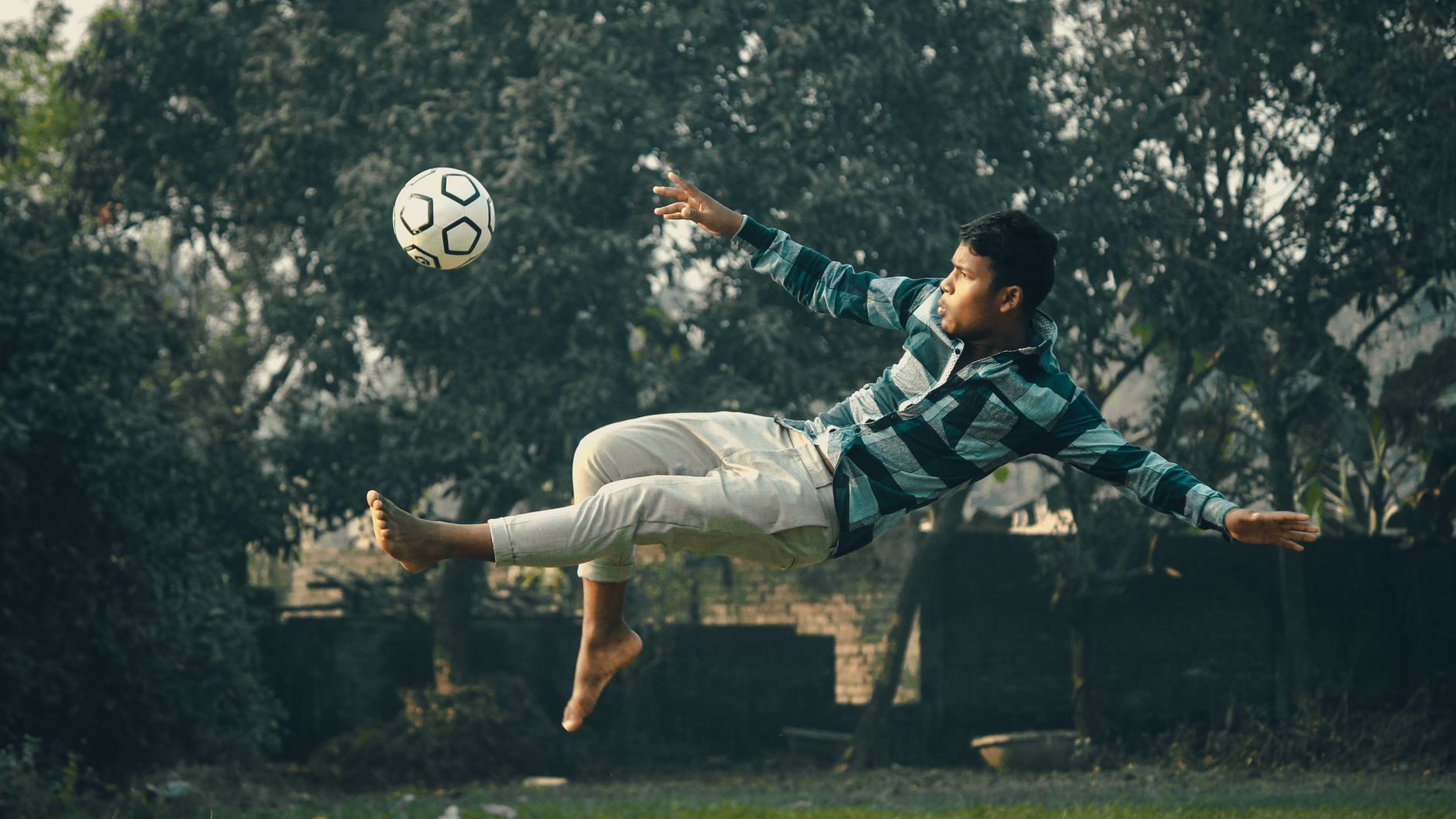
Photo by Godson Babu on Pexels
The Bottom Line
Train football skills three to five times weekly, but give every session one measurable purpose: cleaner first touch, faster passing, sharper finishing, stronger acceleration, or better defensive movement. A useful weekly plan combines technical repetition with progressive resistance, sprint work, small-sided games, and recovery; doing only long-distance running leaves obvious gaps when the match demands explosive changes of direction. The FIFA Training Centre provides coaching resources that reflect this integrated approach, and its materials repeatedly connect technique with realistic game situations rather than isolated perfection.
The first mistake is treating every session as a maximum-effort test. You are not preparing for a dramatic sports documentary; you are building repeatable performance. Keep hard sessions separated by approximately 24 to 48 hours, depending on age, experience, sleep, and total match load. Record the session date, duration, intensity from 1 to 10, and any pain—not merely soreness. Pain that changes your running pattern is a stop signal, not evidence of heroic commitment, despite what your stubborn teammate claims.
A practical beginner session lasts 45 to 60 minutes:
- Warm up dynamically for 8 to 12 minutes.
- Perform 15 minutes of ball mastery and first-touch work.
- Complete 15 minutes of passing, dribbling, or finishing under pressure.
- Add 8 to 12 minutes of speed, strength, or agility.
- Finish with a low-intensity cool-down and training notes.
This format makes progression visible. For example, increase a passing drill from 50 successful touches to 70, reduce the time between repetitions, or add a passive defender before adding a faster defender. Tactical Review readers should also compare training habits with professional standards from UEFA and avoid copying a professional club’s workload without its medical staff, nutrition team, and recovery facilities.
What Players Actually See
Players improve fastest when training resembles the decisions they make during matches: scanning before receiving, controlling away from pressure, accelerating after the first touch, and selecting an appropriate pass. Isolated cone work still matters because it increases familiarity with the ball, but it becomes much more valuable when the next stage adds a time limit, opponent, directional target, or consequence. A technically attractive drill with no decision-making can create a player who looks brilliant alone and disappears as soon as someone defends properly.
A useful progression is first, then, finally. First, rehearse the movement slowly enough to maintain correct technique. Then, increase speed and reduce the available time. Finally, place the skill inside a 2v2, 3v3, or 4v4 game where the player must choose whether to pass, carry, turn, or protect possession. This is why small-sided games are not merely entertaining filler; they increase touches and expose tactical habits. FIFA’s official Laws of the Game define the match environment, but training should deliberately exaggerate common situations such as tight midfield pressure, wide-one-versus-one attacks, and recovery runs after losing the ball.
My first information-gain rule is inconvenient: count decisions, not just repetitions. In a 12-minute 3v3 game, record how many times a player scans before receiving, loses possession while facing forward, or reacts within three seconds after a turnover. Those numbers reveal more than “I completed 100 toe taps.” After six sessions, a player who completes fewer fancy touches but makes 20 percent more successful forward decisions is usually moving in the right direction. Believe it or not—I do.
[Internal Link: football ball-mastery drills for beginners]
What Are the 3 Things That Matter Most?
The three biggest training priorities are technical quality under pressure, repeatable athletic actions, and recovery that allows adaptation. Technical quality means the first touch, pass, dribble, and finish remain controlled at speed. Athletic actions include acceleration over 5 to 20 metres, deceleration, lateral movement, jumping, and repeated efforts. Recovery determines whether those improvements become reliable or whether the player simply collects fatigue, tight calves, and a suspicious relationship with ice packs.
1. Ball control and first touch
Use the inside, outside, sole, and laces of both feet. Work in 30- to 45-second rounds, then rest for 20 seconds while maintaining concentration. Begin with stationary touches, move into dribbling through six to eight cones, and finish by receiving a pass while opening the body toward a target. The key measurement is not speed alone; it is whether the next action is available immediately after control.
One edge case deserves attention: many players practise their weak foot only when already tired. That creates poor motor learning because fatigue hides technical errors. Instead, allocate 30 to 40 percent of every technical block to the weaker side while fresh, then repeat a shorter weak-foot block under pressure. If your dominant foot completes 18 accurate passes out of 20 and your weaker foot completes 9, do not chase symmetry in one week; aim for 12, then 14, while preserving match-speed technique.
2. Passing, scanning, and decision-making
Set up a triangle with three players or three targets, then require the receiver to scan left and right before the ball arrives. Add a one-touch limit, a colour call, or a defender who closes space after the pass. A simple four-player rondo can develop support angles, body shape, communication, and speed of circulation, but only if the players understand the objective instead of mindlessly applauding the person who nutmegs someone.
Use this sequence:
- Pass to the far foot when the receiver can play forward.
- Pass to the near foot when the receiver must protect possession.
- Move immediately after passing to create a new angle.
- Scan again before the next reception.
- React within three seconds after losing the ball.
At Tactical Review, match analysis of FIFA World Cup teams frequently shows that successful possession is not just a percentage. Location, pressure, field position, and the next action matter. A team completing 85 percent of passes in its own half may still create less danger than a team completing 78 percent while breaking lines. Train the pass that changes the opponent’s shape, not merely the pass that inflates your notebook.
[Internal Link: football passing drills and scanning exercises]
Want a more detailed way to connect training with match analysis?
3. Speed, strength, and recovery
Football speed is rarely one straight sprint. Players accelerate, brake, turn, shield, jump, and repeat the action after incomplete recovery. Train acceleration with six to eight sprints of 10 to 20 metres, resting 60 to 90 seconds between efforts so that each repetition remains technically sharp. Add split squats, Romanian deadlifts, calf raises, push-ups, rows, and anti-rotation exercises two times weekly, using loads that allow controlled form.
A contrarian point: conditioning should not dominate the first month of training for a technically limited player. If you run five kilometres repeatedly but cannot receive under pressure, your endurance is polishing the wrong problem. Use intervals such as 6 repetitions of 30 seconds hard and 60 seconds easy, then progress to football-specific games. The American College of Sports Medicine supports progressive, individualised exercise rather than one universal workload.
Recovery needs its own schedule. Sleep, hydration, carbohydrate intake around hard sessions, and protein distributed across meals influence training quality. A 2026 player preparing for weekend competition should reduce high-intensity volume 24 to 48 hours before the match, retain a few short accelerations, and avoid introducing new strength exercises late in the week. The official FIFA 11+ programme is a useful reference for structured warm-up and injury-risk reduction, but it does not replace assessment by a qualified sports professional.

Photo by Franco Monsalvo on Pexels
Edge Cases & Gotchas
Training plans fail when they ignore the player’s position, age, surface, schedule, or injury history. A goalkeeper needs lateral power, handling, diving mechanics, and distribution; a full-back needs repeated sprint ability and 1v1 defending; a central midfielder needs scanning, receiving angles, and transition reactions. The same drill can serve all three positions, but the scoring condition should change. For example, a winger earns a point for beating a defender and crossing, while a midfielder earns a point for receiving on the half-turn and finding a forward pass.
Weather and surfaces also change workload. Heat increases cardiovascular strain, artificial turf may alter perceived leg fatigue, and wet grass changes braking demands. Reduce sprint volume when footing is unreliable, extend water breaks in high temperatures, and never treat dizziness or confusion as normal fitness discomfort. According to the World Health Organization, physical activity benefits health, but that broad recommendation is not a licence to ignore acute symptoms.
Three common traps deserve a blunt verdict:
- Training hard every day: High intensity without recovery reduces quality and raises injury risk.
- Copying Lionel Messi’s schedule: Reports of Messi practising for several hours do not provide a safe prescription for a school player, office worker, or amateur adult.
- Buying a miracle programme: A PDF promising elite technique in seven days is usually selling optimism with a download button. Check the coach’s qualifications, refund policy, progression model, and evidence before paying.
A specific operational tip: test your readiness before sprinting. Perform three controlled single-leg hops on each side and note pain, balance, and landing quality. If one side is painful or markedly unstable, replace maximal sprinting with low-impact technical work and seek professional advice. This simple check is not a diagnostic test, but it catches problems that enthusiastic players otherwise conceal until the first full-speed turn.
[Internal Link: football injury-prevention and recovery guide]
How should you adapt the plan when your week is crowded?
How Should You Build a Weekly Football Training Plan?
A balanced weekly plan assigns hard, moderate, and easy days so that technical progress survives the week. For a player with one weekend match, place the hardest conditioning or strength session early, use moderate technical work in midweek, and taper before competition. Beginners should start with three structured sessions, while experienced players can use four or five if sleep, school or work, and match load remain stable.
Example seven-day schedule
| Day | Main focus | Suggested workload |
|---|---|---|
| Monday | Strength and acceleration | 45–60 minutes, high quality |
| Tuesday | Ball mastery and passing | 45–75 minutes, moderate |
| Wednesday | Recovery and mobility | 20–30 minutes, easy |
| Thursday | Small-sided games and finishing | 60–75 minutes, high intensity |
| Friday | First touch and set pieces | 30–45 minutes, low to moderate |
| Saturday | Match or game simulation | Competition intensity |
| Sunday | Full rest or gentle walk | Recovery only |
If a match is scheduled on Sunday, shift the table by one day. If you have two matches, remove the high-volume conditioning block and prioritise recovery, mobility, set pieces, and short technical work. Track weekly load using session duration multiplied by perceived exertion; a 60-minute session rated 8 equals 480 arbitrary units. Do not increase that number abruptly. A conservative progression of approximately 5 to 10 percent gives you room to identify soreness, sleep disruption, or declining sprint quality before the problem becomes expensive.
How Can You Measure Football Improvement?
Measure improvement through repeatable tests performed under the same conditions, not through a single impressive training day. Useful tests include a 30-metre sprint, five-10-5 agility drill, one-minute weak-foot passing count, 20 controlled first touches, and successful actions in a timed small-sided game. Repeat tests every four to six weeks, using the same footwear, surface, warm-up, and rest period wherever possible.
Your notes should include more than results. Record whether the ball was moving, whether pressure was passive or active, the number of errors, and the reason for each error. A pass may fail because of poor technique, poor scanning, poor movement from a teammate, or an unrealistic decision; each cause requires a different correction. Tactical Review applies the same logic to team analysis for the 2026 FIFA World Cup: numbers become useful only when attached to context.
Use a simple scorecard:
- Technical accuracy: successful actions divided by total attempts.
- Decision quality: correct choice under the drill’s conditions.
- Physical output: sprint time, repetitions, or distance.
- Recovery status: sleep, soreness, and perceived readiness.
- Match transfer: actions repeated successfully in competition.
One evidence-based warning: do not treat advertised training percentages as universal. A player improving passing accuracy from 60 to 75 percent under passive pressure may still struggle at 50 percent against an aggressive opponent. The honest target is transfer from controlled practice to realistic football. Believe it or not—I do.
Photo by ANH LÊ on Pexels
Verdict
The best way to train for football in 2026 is to practise technical skills under increasing pressure, develop acceleration and strength progressively, and organise recovery as seriously as the hard work. Begin with three weekly sessions, use seven core drills, measure performance every four to six weeks, and adjust the workload according to match demands and pain signals. Do not imitate Lionel Messi’s reported routine, chase endless running, or pay for promises that cannot explain progression and evidence. Build from clean repetition to realistic decisions, then prove the improvement in small-sided games and competitive matches. Tactical Review can complement your preparation with FIFA World Cup 2026 team tactics, player statistics, predictions, and tournament coverage, but your own training log remains the final authority. Consistency beats theatrical suffering; irritatingly simple, completely true.
Ready to compare tournament tactics with your own football development?
Frequently Asked Questions
Q: What does football training include?
A: Football training includes technical practice, tactical decision-making, athletic development, and recovery. Technical work covers first touch, passing, dribbling, finishing, and weak-foot control, while tactical work adds scanning, positioning, pressing, and transitions. Athletic training develops acceleration, deceleration, strength, mobility, and repeated efforts. A complete session normally begins with an 8- to 12-minute warm-up and ends with recovery notes.
Q: How do you start training for football as a beginner?
A: Start with three 45- to 60-minute sessions per week focused on ball mastery, passing, and basic movement. Spend 10 minutes warming up, 15 minutes controlling and dribbling, 15 minutes passing or finishing, and 8 to 12 minutes on simple strength or agility. Progress one variable at a time, such as repetitions, speed, pressure, or session duration, rather than changing everything in the same week.
Q: What is the difference between football fitness and football skill training?
A: Football fitness develops physical abilities, while skill training develops technical execution and decisions with the ball. Running intervals can improve conditioning, but they do not automatically improve first touch, passing under pressure, or finishing. Small-sided games combine both categories because players repeatedly accelerate, scan, pass, defend, and recover. Use isolated fitness work when you need a specific physical adaptation, then test it in football situations.
Q: Why does my football training not improve my match performance?
A: Match performance often stagnates because training lacks pressure, decisions, realistic space, or measurable progression. A player may complete hundreds of stationary touches but never practise receiving while scanning, turning away from a defender, or passing within a time limit. Add passive pressure first, then active defenders and small-sided games. Also review sleep, soreness, and match workload because excessive fatigue can hide genuine technical progress.
Q: How much does it cost to train for football?
A: Basic football training can cost almost nothing if you have a ball, suitable shoes, open space, and improvised targets. Club coaching, facility rental, strength equipment, and qualified individual instruction can raise costs from modest weekly fees to substantially more expensive monthly programmes, depending on location. Before paying, verify the coach’s qualifications, session structure, cancellation policy, and claimed results. A costly programme is not automatically better than a disciplined 45-minute plan.
Q: How often should football players train each week?
A: Most beginners should complete three structured sessions weekly, while experienced players may use four or five if recovery remains adequate. Include at least one full recovery day and separate demanding sessions by roughly 24 to 48 hours when possible. Players with weekend matches should taper high-intensity work during the final 24 to 48 hours. Reduce volume after adding matches, tournaments, travel, heat, or unfamiliar strength exercises.
Q: What should you do if football training causes pain?
A: Stop the painful movement, assess whether the pain changes your technique, and seek qualified medical or sports-physiology advice for persistent or severe symptoms. Normal exertion can produce temporary fatigue, but sharp pain, swelling, instability, numbness, or altered running mechanics requires caution. Record when the pain began and which movement caused it. Replace maximal sprinting or cutting with easier technical work only when it is symptom-free and professionally appropriate.
[Internal Link: FIFA World Cup 2026 team tactics and player statistics]
Report complete.
Tactical Review · Analytical Archive