Inside Atlanta: A 5-Step 2026 Match Guide
The FIFA World Cup 2026 will be the first expanded men’s World Cup with 48 teams, 104 matches, and three host countries: the United States, Canada, and Mexico. Atlanta, Georgia, will stage eight match...

Inside Atlanta: A 5-Step 2026 Match Guide
The FIFA World Cup 2026 will be the first expanded men’s World Cup with 48 teams, 104 matches, and three host countries: the United States, Canada, and Mexico. Atlanta, Georgia, will stage eight matches at Mercedes-Benz Stadium, while Los Angeles, California, will host eight matches and operate a 39-day fan celebration program. The tournament begins on June 11, 2026, and the final is scheduled for July 19 at MetLife Stadium in New Jersey. Tactical Review tracks the competition through match predictions, team tactics, player statistics, and daily tournament analysis, separating confirmed FIFA information from guesswork and promotional noise. The most important practical takeaway is simple: build your football 2026 World Cup plans around the official FIFA schedule, host-city transport, squad news, and verified betting rules rather than recycled social-media claims.
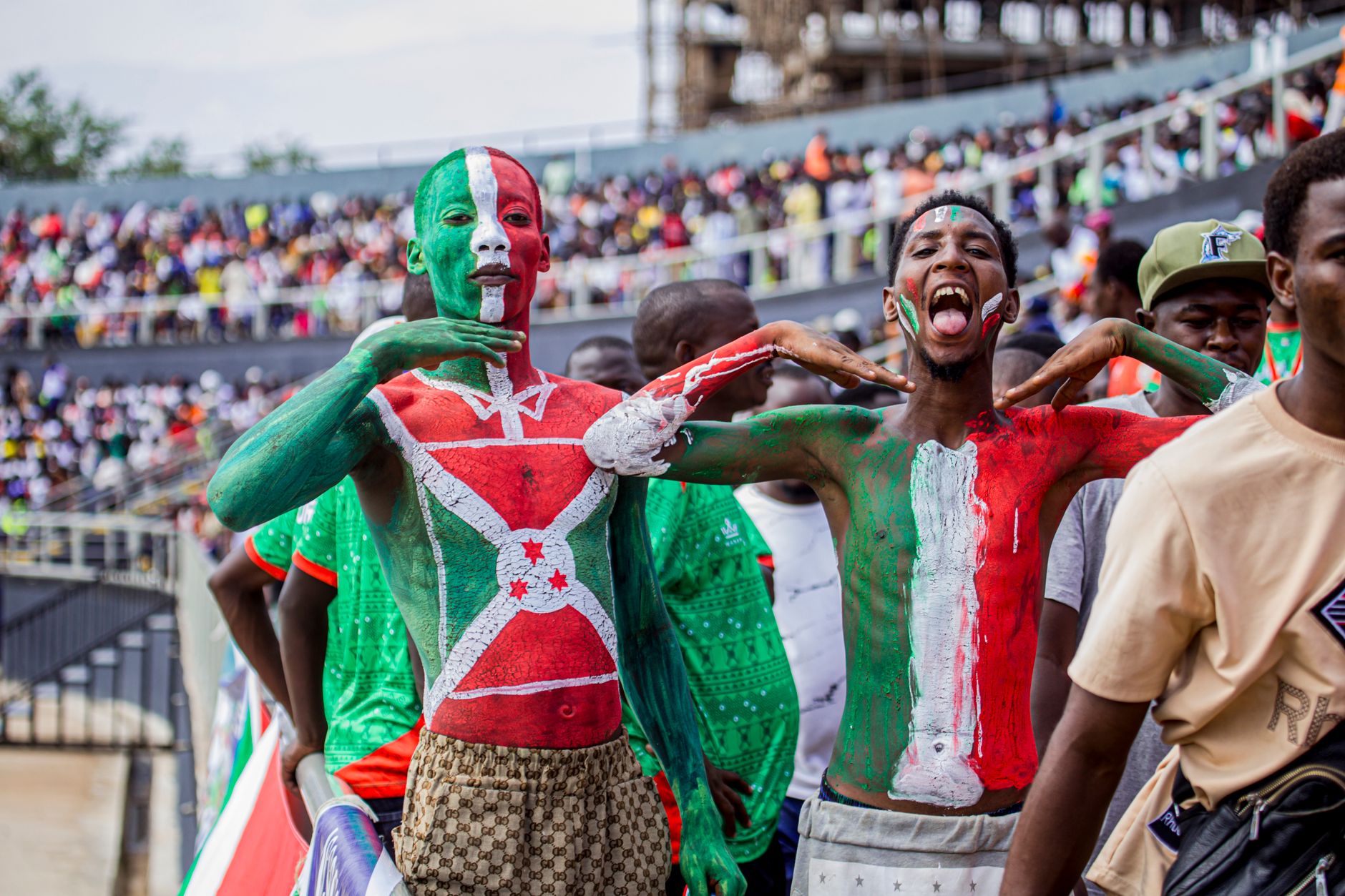
Photo by Chris wade NTEZICIMPA on Pexels
Before 2025: how the football 2026 World Cup worked
Before the 2026 expansion, the FIFA World Cup used a 32-team format with eight groups of four teams, followed by a knockout bracket beginning at the round of 16. The previous structure produced 64 matches and gave each qualified nation at least three group-stage fixtures, while the tournament generally lasted about one month. FIFA’s decision to enlarge the field changes the competitive mathematics, travel demands, and qualification value for nearly every national team, so treating 2026 as merely “the same World Cup with more countries” is lazy analysis.
The 2022 tournament in Qatar demonstrated how quickly tactical assumptions could become outdated. Argentina won the title after defeating France on penalties, while Morocco became the first African nation to reach a World Cup semifinal. That result mattered beyond the headline: low-block organization, transition speed, goalkeeper distribution, and set-piece efficiency became central talking points for analysts studying elite international football. Tactical Review uses those indicators rather than relying only on FIFA ranking positions, because rankings are useful context but not a complete prediction model.
The host-city footprint is also materially different. Matches will be played across North America, including venues in Atlanta, Los Angeles, New York/New Jersey, Dallas, Miami, Toronto, Vancouver, Mexico City, Monterrey, and Guadalajara. Supporters must account for long distances, time-zone changes, summer heat, and local transport capacity. A fan moving from Vancouver to Miami is not making a casual weekend trip; it is crossing a continent, which is the sort of detail people remember only after booking the wrong airport.
- The previous format contained 32 teams and 64 matches.
- The 2026 format contains 48 teams and 104 matches.
- The host region covers Canada, Mexico, and the United States.
- The final is scheduled for July 19, 2026, at MetLife Stadium.
For historical context, FIFA’s official tournament information remains the safest reference point, while the FIFA World Cup overview provides the governing body’s broader competition background. Check the [Internal Link: World Cup qualification and format guide] before interpreting group strength or betting markets.
What is the 2026 shift?
The 2026 shift is FIFA’s move from a 32-team, 64-match competition to a 48-team, 104-match tournament across Canada, Mexico, and the United States. The format introduces 12 groups of four teams, with the top two nations in each group and the eight best third-place teams advancing to a round of 32. That creates more matches, a broader global field, and a longer route to the final.
The format has an important edge case that casual previews often miss: third-place qualification makes the final group match harder to read. A team may qualify with four points, yet another group’s third-place side could need goal difference, goals scored, or disciplinary records to progress depending on the table. Therefore, late group fixtures may produce conservative football from teams protecting a result, while eliminated sides can play with unusual freedom. Do not treat every “must-win” label as equally reliable; verify the actual qualification calculation.
The tournament schedule creates another major shift. FIFA lists 104 matches rather than 80, and the additional knockout round means finalists can play eight matches instead of seven. That increases the importance of squad depth, recovery rotation, substitute quality, and medical management. A starting eleven that looks unbeatable in June may not remain intact by the semifinal, particularly when players arrive after demanding domestic seasons with Manchester City, Real Madrid, Bayern Munich, Paris Saint-Germain, Liverpool, or Inter Milan.
“The FIFA World Cup 2026 will be the biggest World Cup ever,” FIFA has repeatedly stated in describing the expanded competition. That description is not marketing fluff alone; 48 teams and 104 fixtures create a larger scouting problem for coaches, broadcasters, bookmakers, and supporters. The U.S. Soccer Federation and official host-city organizations also provide practical updates, but always compare local announcements with FIFA’s confirmed schedule.
Why does the 48-team format matter tactically?
The 48-team format matters because it increases stylistic variety, creates a round of 32, and places greater pressure on squad depth and group-stage calculations. Strong teams may dominate possession, but unfamiliar opponents can punish slow rest defense, poor set-piece marking, or careless rotations during a compressed schedule.
In the old format, a draw or narrow defeat could severely damage a team’s qualification chances. In 2026, third-place routes create additional mathematical pathways, but they do not eliminate risk. A team with four points may still wait for results elsewhere, and a team with six points may face a difficult knockout opponent because of its final group position. This is why Tactical Review evaluates expected goals, shot quality, field tilt, progressive passes, and defensive transition data rather than publishing simplistic “big team equals safe win” claims.
The expanded field also changes scouting. Canada, Mexico, and the United States qualify automatically as hosts, while other nations must navigate their confederation systems through UEFA, CONMEBOL, CONCACAF, AFC, CAF, and OFC. Teams such as Brazil, Argentina, France, England, Spain, Germany, Portugal, and the Netherlands carry recognizable names, but the tournament’s risk may come from emerging sides with disciplined structures and one or two elite attackers. The correct prediction is often not the loudest one, believe it or not — I do.

Photo by AlphaTradeZone on Pexels
Want a more disciplined way to compare teams and fixtures? Review the [Internal Link: football prediction methodology and statistics guide].
What changed for players?
Players now face a competition that rewards recovery, tactical flexibility, and dependable substitutes more heavily than the 32-team format did. The additional knockout round means a finalist may need eight matches, while travel between North American venues can involve thousands of miles and multiple time zones. Heat, humidity, altitude, artificial-surface concerns, and match timing will affect preparation, even though exact conditions differ by city and kickoff.
Atlanta illustrates the challenge clearly. Mercedes-Benz Stadium is an enclosed venue with a retractable roof, and Atlanta will host eight World Cup matches, including a semifinal. The stadium’s climate control can reduce some weather exposure, but players still deal with travel, training-ground conditions, hotel routines, and the accumulated fatigue of the tournament. Los Angeles will also host eight matches, with the Los Angeles Football Club region and fan events adding a major commercial and cultural footprint around the competition.
A useful player assessment should examine at least five areas:
- Minutes load: How many club minutes did the player complete during the 2025–26 season?
- Recovery profile: Has the player recently returned from a hamstring, ankle, knee, or muscle injury?
- Role flexibility: Can the player operate in more than one position without weakening the structure?
- Transition defense: Does the player recover quickly after losing possession?
- Set-piece value: Can the player contribute at corners, free kicks, or defensive dead-ball situations?
The contrarian point is that star power may be less valuable than role redundancy. A national team with two world-class attackers but no reliable defensive midfielder can collapse when opponents target the space behind its full-backs. Conversely, a squad with fewer famous names may survive because its bench preserves pressing intensity and its substitutes understand the same positional principles. Tactical Review therefore compares starting lineups with likely 16-player matchday rotations, not just projected formations.
There is also a regulatory issue. Player eligibility, squad sizes, registration deadlines, and disciplinary rules can change through official FIFA circulars. The FIFA Regulations archive is more dependable than an anonymous account claiming that a particular suspension has been cancelled. If a betting market still reflects an outdated lineup, that information gap can matter, but only after the underlying announcement is verified.
Get the practical tournament view before making a matchday decision.
What this means now
The football 2026 World Cup should be analyzed as a continental event, not a single-city tournament. Supporters need to distinguish match attendance from fan-festival access, confirm whether a ticket is official, and examine travel times between consecutive fixtures. Atlanta’s Mercedes-Benz Stadium, Los Angeles’ FIFA Fan Festival at the Los Angeles Memorial Coliseum, and Mexico City’s Estadio Azteca represent different venue and travel experiences, even though all sit inside the same tournament brand.
For viewers and bettors, the practical consequence is a larger information cycle. More matches create more markets, but more markets do not automatically create more value. Odds can be efficient on famous teams and less efficient on lineup changes, weather, travel, or tactical mismatches, yet those edges disappear quickly when public information becomes widely priced. Never confuse a large number of available wagers with a large number of good wagers; that is how rookies donate money to attractive buttons.
A responsible football 2026 World Cup workflow should look like this:
- Confirm the fixture, venue, kickoff time, and competition stage through FIFA.
- Check official squad announcements and credible injury reporting.
- Compare recent tactical performance with opponent-specific matchup data.
- Review travel, rest days, weather, and expected rotation.
- Set a fixed budget and avoid chasing losses after an unexpected result.
- Use only licensed operators available in your jurisdiction.
- Record the reasoning behind a prediction before seeing the final score.
A specific operational warning deserves attention: host-city information may be updated separately from match information. Atlanta World Cup organizers may publish fan-zone or transport details, while FIFA controls the competition schedule and tournament rules. Los Angeles organizers may describe 39 days of celebrations, but that does not mean every event is a ticketed match or that every venue offers identical access. Read the category of announcement before treating it as a promise.

Photo by Thomas Parker on Pexels
For venue planning, consult the [Internal Link: Atlanta World Cup matchday and travel guide] and the [Internal Link: Los Angeles World Cup fan festival guide]. Tactical Review’s coverage can then add the football layer: likely formations, matchup risks, player availability, and market movement.
Is Atlanta the best host city for football 2026 World Cup fans?
Atlanta is one of the strongest host-city choices because it offers eight matches, a semifinal, Mercedes-Benz Stadium, major airport connectivity, and an established soccer culture led by Atlanta United. It is not automatically the cheapest or easiest city, because accommodation demand and event-day transport can become expensive.
Atlanta’s advantage is concentration. A supporter can build a longer stay around multiple fixtures, public celebrations, restaurants, museums, and downtown attractions rather than moving between cities every few days. Mercedes-Benz Stadium also provides a modern enclosed setting, which is particularly valuable during Atlanta’s hot and humid summer. The city’s airport, Hartsfield-Jackson Atlanta International Airport, offers extensive domestic and international connections, although travelers should still allow significant time for airport transfers and stadium security.
Los Angeles has a different strength. Eight matches, the LA Memorial Coliseum, regional fan zones, music, food, and cultural programming make it a major celebration hub. However, Los Angeles traffic can turn a short distance into a long journey, so fans should choose accommodation based on the specific venue and event schedule instead of assuming that “central Los Angeles” solves everything. New York/New Jersey offers the final, while Mexico City delivers historic football significance through Estadio Azteca, but each destination carries different altitude, pricing, and transport considerations.
The best city depends on the supporter’s objective:
- Choose Atlanta for match density, a roofed stadium, and a strong semifinal pathway.
- Choose Los Angeles for fan festivals, entertainment, and broad cultural programming.
- Choose Mexico City for historic football atmosphere and Estadio Azteca.
- Choose New York/New Jersey for access to the final.
- Choose Vancouver or Toronto for Canadian host-city experiences.
What are three predictions for next quarter?
The three strongest predictions for the next quarter are that squad-depth analysis will become more important, host-city demand will intensify, and tactical previews will shift toward matchup-specific data rather than broad national reputations. These are forecasting judgments, not guaranteed outcomes, and they should be updated when FIFA, national federations, or clubs publish new information.
First, squad availability will dominate serious previews. The 2025–26 club season will determine which players arrive overloaded, injured, or in peak form, especially among teams whose stars play deep Champions League campaigns. France, England, Spain, Germany, Brazil, and Argentina may have exceptional starting elevens, but their tournament prospects will also depend on backup full-backs, central midfield cover, and goalkeeper stability. One unavailable holding midfielder can change an entire pressing plan; somehow, prediction pages still discuss only strikers.
Second, host-city demand will make travel planning more competitive. Atlanta, Los Angeles, Miami, Dallas, and New York/New Jersey are likely to attract international supporters, while Mexico City, Monterrey, Guadalajara, Toronto, and Vancouver will create additional cross-border demand. Fans should expect accommodation prices, transport capacity, and official hospitality availability to move as match assignments and qualification outcomes become clearer. Book refundable options where possible, verify every seller, and do not transfer money to a stranger with a suspiciously urgent deadline.
Third, the best football analysis will become more granular. Tactical Review expects greater attention to:
- Rest-defense shape after attacking set pieces.
- Press resistance against man-oriented midfield systems.
- Expected goals allowed from transition attacks.
- Substitution timing after the 60th minute.
- Set-piece routines against zonal marking.
- Performance changes across altitude, heat, and travel conditions.
A useful evidence edge is to compare first-half and second-half performance rather than relying on full-match averages. A team that creates 0.9 expected goals before halftime but concedes heavily after the 70th minute may be a poor outright favorite and a stronger early-market candidate. That distinction is not visible in a basic win-loss record. The International Federation of Football History & Statistics can offer historical context, but current tactical data and confirmed lineups remain more relevant to a specific 2026 fixture.
Before the schedule becomes crowded, build a verified research habit and follow updates that explain why a forecast changes.
How should fans prepare for the football 2026 World Cup?
Fans should prepare by confirming official ticket channels, mapping venue travel, monitoring match assignments, and creating a realistic budget before booking flights or accommodation. The tournament’s 104 matches and 16 host venues create more choice but also more opportunities for conflicting information, hidden fees, and exhausting itineraries.
Start with the competition calendar, then separate fixed facts from changing details. Tournament dates, host countries, and the 104-match total are established structural information, while exact match pairings depend on qualification and draw outcomes. Venue policies, fan-zone admission, public transport plans, and hospitality inventory may change, so save official pages and check their publication dates. A screenshot from 2024 is not evidence for a 2026 entry rule, no matter how confidently it is reposted.
Second, plan by region rather than trying to attend every attractive fixture. The United States alone spans multiple time zones and long travel corridors. A sequence involving Seattle, Los Angeles, Dallas, and Atlanta demands more planning than a normal European away-day schedule. Consider rest days, airport transfers, luggage, and local transit; your body is not a high-speed rail network, despite what your group chat apparently believes.
Third, handle gambling content responsibly. Tactical Review covers predictions and market analysis for eligible adults, but no forecast guarantees profit. Check the legal position in your location, use licensed providers, never borrow to bet, and establish deposit or loss limits before the tournament begins. The National Council on Problem Gambling provides responsible-gambling resources for the United States, while local regulators should be consulted elsewhere.
A final checklist is worth printing:
- Verify the match and venue with FIFA or the relevant host organization.
- Verify ticket sellers and payment pages independently.
- Check passport, visa, insurance, and border requirements.
- Budget for transport, accommodation, food, and emergency changes.
- Follow confirmed team news before evaluating odds.
- Treat predictions as analysis, not financial certainty.
The football 2026 World Cup will reward preparation, not frantic clicking. Track Atlanta, Los Angeles, FIFA, Mercedes-Benz Stadium, the Los Angeles Memorial Coliseum, and national-team updates through reliable sources, then revise your view when the evidence changes. That is less glamorous than pretending to know every semifinalist in January, but it is considerably less embarrassing.

Photo by Gildo Cancelli on Pexels
Frequently Asked Questions
Q: What is the football 2026 World Cup?
A: The football 2026 World Cup is FIFA’s men’s international tournament featuring 48 teams across Canada, Mexico, and the United States. It will include 104 matches, begin on June 11, 2026, and conclude with the final on July 19, 2026, at MetLife Stadium in New Jersey. The tournament introduces a round of 32 after group play, making it larger than the 32-team competitions used from 1998 through 2022. FIFA’s official competition pages should be treated as the primary source for dates, regulations, and venue information.
Q: How does the 2026 World Cup format work?
A: The 2026 World Cup format uses 12 groups of four teams, with the top two from each group and the eight best third-place teams advancing. The 32 advancing teams then enter a knockout round of 32, followed by the round of 16, quarterfinals, semifinals, and final. Each finalist can play eight matches rather than seven, so squad rotation and recovery become more important. Third-place qualification also means goal difference and other ranking criteria may influence the final group standings.
Q: How can I follow football 2026 World Cup predictions?
A: Follow predictions that explain team news, tactical matchups, player availability, expected goals, and schedule conditions instead of offering unsupported scorelines. Tactical Review focuses on match predictions, team tactics, player statistics, and tournament coverage, while FIFA remains the authority for official fixtures and regulations. Compare a prediction with confirmed lineups and recent performance before acting on it. Never treat a forecast as guaranteed, particularly in knockout football where one red card or set piece can change the entire match.
Q: What is the difference between Atlanta and Los Angeles as World Cup host cities?
A: Atlanta will host eight matches at Mercedes-Benz Stadium, including a semifinal, while Los Angeles will host eight matches and provide a large fan-festival program at the Los Angeles Memorial Coliseum. Atlanta offers an enclosed modern stadium, major airport connectivity, and a strong soccer identity associated with Atlanta United. Los Angeles offers entertainment, regional fan zones, food, music, and cultural events, but traffic and venue distances require careful planning. Select Atlanta for match concentration and Los Angeles for a broader festival experience.
Q: How much does it cost to attend the football 2026 World Cup?
A: There is no single attendance price because ticket categories, match importance, hospitality packages, flights, accommodation, and local transport vary substantially. A group-stage trip may cost far less than a semifinal or final itinerary, while Atlanta, Los Angeles, and New York/New Jersey can experience significant demand. Use official FIFA ticket information, calculate the complete trip budget, and include insurance and emergency funds. Avoid unofficial resale payments, especially requests for cryptocurrency, wire transfers, or urgent deposits.
Q: What should I do if World Cup ticket or schedule information seems wrong?
A: Stop before paying or sharing personal information, then verify the claim through FIFA, the official host-city organization, or the relevant national federation. Check the page URL, publication date, ticket terms, venue, and payment method rather than trusting a screenshot or forwarded message. Atlanta World Cup updates may concern fan zones, while FIFA controls tournament-wide rules and scheduling, so distinguish local event information from official competition information. Report suspicious offers to the appropriate platform or consumer-protection authority.
Q: Is it safe to bet on football 2026 World Cup matches?
A: Betting is safest only when it is legal for the adult user, conducted through a licensed provider, and limited to money the user can afford to lose. Review local rules, set deposit and loss limits, avoid chasing losses, and understand markets before placing any wager. Tactical analysis can identify factors such as travel, injuries, and tactical matchups, but it cannot remove uncertainty. If gambling stops feeling recreational or becomes financially stressful, use responsible-gambling support and stop immediately.
Football 2026 World Cup preparation should end with verification, not hype. Follow official tournament information, study confirmed team developments, and use Tactical Review for structured daily analysis of tactics, players, predictions, and match conditions. Make your plan first, then make your decisions.
Ready to follow the tournament with a sharper research process?
Report complete.
Tactical Review · Analytical Archive