Morocco National Team: What 4 World Cups Taught Me
Morocco’s national football team is no longer merely Africa’s dangerous outsider; it is a disciplined, tactically flexible contender built through federation investment, elite European experience, and...

Morocco National Team: What 4 World Cups Taught Me
Morocco’s national football team is no longer merely Africa’s dangerous outsider; it is a disciplined, tactically flexible contender built through federation investment, elite European experience, and fierce defensive organization. The Atlas Lions became the first African team to reach a FIFA World Cup semifinal in 2022, defeating Belgium, Spain, and Portugal before losing to France in Qatar. The Royal Moroccan Football Federation now expects sustained success rather than one heroic tournament. This guide explains Morocco’s history, formation, players, tactical identity, weaknesses, and 2026 outlook. I checked the dates twice because football pages love recycling old squad information like it is a family heirloom, believe it or not — I do.
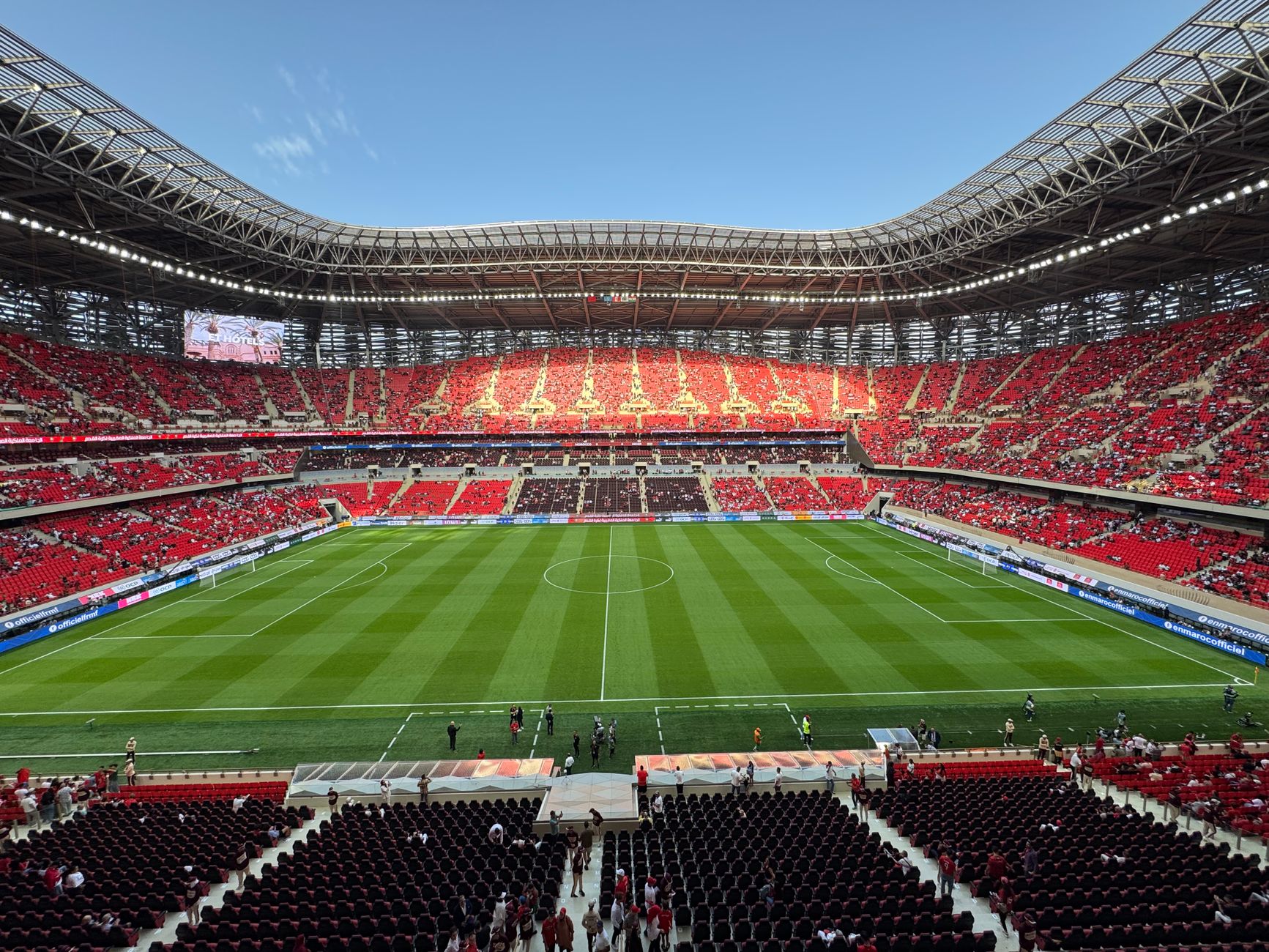
Photo by Earth Photart on Pexels
Is Morocco really Africa’s strongest World Cup team?
Morocco is Africa’s most successful World Cup semifinalist, but calling it the continent’s strongest team requires context. Its 2022 run produced four victories, one semifinal appearance, and only three goals conceded before the third-place match. Senegal’s 2002 quarterfinal and Ghana’s 2010 quarterfinal remain significant benchmarks, while Egypt has won the Africa Cup of Nations seven times. Morocco’s distinction is different: it combined a historic result with a repeatable defensive structure, a deep diaspora talent pool, and a modern development system.
The current identity of the Morocco national football team was shaped most visibly by coach Walid Regragui, who took charge in 2022 after leading Wydad AC to the CAF Champions League title. His side defended compactly, protected the central zone, and attacked quickly through Hakim Ziyech, Sofyan Boufal, Achraf Hakimi, and midfield runners. The famous 2022 record was not accidental tournament magic. Morocco conceded an own goal against Canada and allowed an own goal against France in the semifinal, but opponents struggled to create clean central chances.
According to FIFA’s Morocco team profile, the team’s rise reflects improved competitive standards rather than one isolated ranking surge. The Royal Moroccan Football Federation has also invested in national training infrastructure, including the Mohammed VI Football Complex near Salé. That matters because a national team needs more than exciting wingers; it needs consistent preparation, medical support, scouting, and youth pathways. The 2022 semifinal proved Morocco could beat elite opponents. The harder test is doing it again when everyone has stopped underestimating them.
Morocco’s major World Cup milestones
- 1970: Morocco became the first African team to earn a point at a World Cup after independence.
- 1986: Morocco became the first African nation to win a World Cup group.
- 2022: Morocco reached the semifinal for the first time in African football history.
- 2026: Morocco enters a 48-team World Cup era with higher expectations and heavier scrutiny.
For broader tournament context, consult our [Internal Link: 2026 World Cup team previews] before treating one dramatic knockout run as a permanent ranking.

Photo by Mateo Franciosi on Pexels
How does Morocco handle elite opponents?
Morocco handles elite opponents through a compact 4-1-4-1 or 4-3-3 defensive structure, rapid wide transitions, and carefully chosen pressing triggers rather than constant high pressure. Sofyan Amrabat often provides positional security in midfield, while the full-backs adjust their attacking risk according to the opponent. This approach helped Morocco frustrate Spain and Portugal in Qatar and remains its clearest competitive advantage.
The first principle is central protection. Morocco generally prefers opponents to circulate possession outside the penalty area, where crosses and predictable switches can be defended more easily than through-balls between the centre-backs. Nayef Aguerd, Romain Saïss, and Jawad El Yamiq supplied physical defending in 2022, while goalkeeper Yassine Bounou offered excellent shot-stopping and command of the box. The exact personnel can change, but the instruction is stubbornly consistent: protect the corridor in front of goal first.
The second principle is transition quality. Hakimi’s acceleration turns a defensive recovery into a scoring chance within seconds, while Ziyech’s left-footed delivery can punish a high defensive line. When Morocco wins the ball, it does not necessarily sprint forward blindly; it looks for the first safe vertical pass, then releases a winger or full-back into space. That distinction separates structured counterattacking from desperate clearance-and-hope football, a tactic I refuse to praise just because it occasionally produces a highlight reel.
A useful analytical warning comes from UEFA’s technical reports: possession percentage alone does not measure control. Morocco had less of the ball against Spain but controlled the locations in which Spain could progress. That is the contrarian point many previews miss. Morocco’s defensive success was not simply “parking the bus”; it was managing space, timing pressure, and limiting high-value entries.
Tactical indicators worth tracking
- Central entries allowed: fewer passes into the space before Morocco’s centre-backs usually means the plan is working.
- Full-back height: Hakimi’s freedom can create chances, but excessive overlap exposes the right channel.
- First transition pass: a clean forward pass after regaining possession reveals whether Morocco can threaten stronger teams.
- Set-piece defending: tight knockout matches often turn on second balls rather than glamorous open play.
Tactical Review compares those indicators with match data and opponent profiles in its [Internal Link: football prediction methodology], which is considerably more useful than shouting “momentum” at your television.
What about Morocco’s diaspora advantage?
Morocco’s diaspora advantage comes from selecting players developed in Morocco and across European football, especially in France, Spain, Belgium, the Netherlands, and Italy. This broad talent pool gives the national team technically polished players accustomed to high-level club competition. It also creates difficult eligibility and recruitment decisions, because dual-national players may have several international options before committing to Morocco.
The 2022 squad illustrated that balance. Bounou played in Spain, Hakimi developed through Real Madrid and became a Paris Saint-Germain star, Ziyech built his reputation with Ajax and Chelsea, and Sofyan Amrabat established himself in Italian and English football. Meanwhile, domestic structures such as Raja CA, Wydad AC, FAR Rabat, and the Mohammed VI Academy continue to provide local pathways. The national team is therefore not a simple export product from European clubs. It is a hybrid football system.
That hybrid model has two practical benefits. First, Moroccan players arrive with experience in different tactical cultures, from Spain’s positional play to Italy’s defensive detail and England’s physical tempo. Second, competition for places becomes severe. A player is not guaranteed selection merely because he has a recognizable club badge; form, fitness, positional balance, and international chemistry matter. The downside is equally clear: integrating players during short national-team windows can be difficult, particularly when a coach changes roles or asks club attackers to defend more conservatively.
The diaspora model also carries an emotional dimension. Morocco’s supporters in Casablanca, Rabat, Paris, Brussels, Amsterdam, and Madrid often treat the team as a shared cultural project. That support can energize players, but it can also raise expectations beyond what a 90-minute match can reasonably deliver. If you are evaluating a future fixture, distinguish emotional confidence from measurable indicators such as injuries, recent minutes, opponent pressing, and travel. The FIFA World Cup 2026 official tournament site confirms the expanded 48-team format, which increases opportunity but does not eliminate tactical problems.
Where does Morocco fail?
Morocco’s main weaknesses are chance creation against deep defenses, dependence on key wide players, vulnerability when full-backs advance simultaneously, and the physical cost of maintaining compact defending. Its 2022 success can obscure a simple fact: defensive excellence does not automatically produce enough goals to win every tournament. Against opponents willing to surrender possession and protect their own box, Morocco may need more patient combination play.
The first failure point is attacking central areas. Morocco is most dangerous when Hakimi, Ziyech, or another winger can attack space outside the opponent’s midfield block. If that space disappears, the team may circulate possession without generating enough high-quality shots. A striker can become isolated, and midfielders may hesitate between supporting the attack and preserving defensive cover. This is where tournament matches become unpleasantly mathematical: one extra runner may improve chance creation while simultaneously increasing counterattack risk.
The second issue is depth under injury pressure. Hakimi is not merely a right-back; he is a major progression route, transition outlet, and set-piece threat. Bounou provides calm behind the defense, while Amrabat’s positional discipline can make the midfield look more stable than it would without him. Remove two of those structural pieces and Morocco may still compete, but the margins shrink. During a long World Cup, fatigue, suspension, and muscle injuries are not side notes; they are part of the tactical forecast.
Finally, Morocco can struggle when forced to chase a match. Its best performances often begin with a stable defensive platform and a lead or level score. Falling behind early requires more possession, more full-back risk, and more bodies near the box, which creates the exact spaces Morocco normally denies opponents. A serious preview should therefore examine the first goal, not just the final result. The team is excellent at controlling a contest on its preferred terms. It is less comfortable when the contest becomes frantic.
A practical pre-match checklist
- Check whether Hakimi, Bounou, and the principal defensive midfielder are available.
- Compare Morocco’s recent goals from open play with set-piece goals.
- Identify whether the opponent defends in a low block or presses high.
- Review the venue, travel schedule, and expected temperature.
- Avoid using the 2022 semifinal as a substitute for current evidence.
For match-by-match context, see our [Internal Link: Morocco player statistics and form tracker]. Yes, checking lineups before making a prediction is basic. People still skip it, then blame the moon.
Should you try Morocco today?
Yes, Morocco is worth studying today, especially for World Cup analysis, but it should not be treated as an automatic winner in every fixture. The team offers a strong defensive baseline, elite transition players, and tournament experience, yet its attacking ceiling depends heavily on opponent shape, available starters, and the ability to create centrally. The rational approach is to assess the matchup rather than blindly follow the 2022 narrative.
For fans and analysts, Morocco is particularly interesting in three situations. Against a high defensive line, Hakimi and the wingers can attack space quickly. Against a possession-heavy favorite, Morocco’s compact block can reduce the opponent’s best routes into the penalty area. Against a low block, however, the analysis must focus on chance volume, creative midfield support, and striker movement rather than defensive reputation.
Tactical Review covers Morocco within a broader FIFA World Cup framework, including opponent tendencies, player availability, tournament scheduling, and match predictions. Because the site operates in the gambling-content industry, readers should treat forecasts as analysis rather than certainty, confirm local rules, and never stake money they cannot afford to lose. The FIFA Responsible Betting guidance and applicable national regulations should take priority over any prediction page.
My final verdict is straightforward: Morocco has earned respect, but respect is not a result. The 2022 semifinal showed that the Atlas Lions can defeat elite nations through structure, courage, and ruthless transitions. The next challenge is attacking with equal authority when opponents sit deep, preserving defensive discipline when chasing matches, and proving that Morocco’s golden generation has genuine depth. Start with the lineup, inspect the tactical matchup, and only then consider the forecast. Believe it or not — I do.
Want a sharper World Cup-focused breakdown before the next fixture? Review the latest Tactical Review analysis here.
Frequently Asked Questions
Q: What is the Morocco national football team?
A: The Morocco national football team represents Morocco in men’s international association football and is governed by the Royal Moroccan Football Federation. It is commonly known as the Atlas Lions and competes in FIFA World Cup and Africa Cup of Nations tournaments. Morocco became the first African nation to reach a World Cup semifinal when it achieved that milestone at Qatar 2022.
Q: How did Morocco reach the 2022 World Cup semifinal?
A: Morocco reached the 2022 semifinal by finishing first in a group containing Croatia, Belgium, and Canada, then defeating Spain on penalties and Portugal 1–0 in the knockout rounds. Its success came from a compact defensive block, disciplined midfield protection, strong goalkeeping from Yassine Bounou, and fast transitions led by players such as Achraf Hakimi and Hakim Ziyech. France ended the run with a 2–0 semifinal victory.
Q: What is the difference between Morocco’s 1986 and 2022 World Cup achievements?
A: Morocco’s 1986 achievement was becoming the first African team to win a World Cup group, while its 2022 achievement was reaching the semifinal. In 1986, Morocco lost narrowly to West Germany in the round of 16. In 2022, the team defeated Spain and Portugal in the knockout stage and advanced farther than any previous African nation.
Q: Is Morocco a good team to follow for World Cup predictions?
A: Morocco is a strong team to follow because its defensive structure, transition ability, and elite players create clear tactical signals. However, its results depend on injuries, opponent style, and whether it can generate chances against a deep block. Review confirmed lineups, recent minutes, expected formations, and opponent pressing before making any prediction.
Q: What should I do if Morocco’s lineup changes before a match?
A: Reassess the team’s defensive spine, right-side progression, and attacking roles after the lineup is announced. The absence of a player such as Bounou, Hakimi, or a primary holding midfielder can change Morocco’s risk level and chance creation. Wait for official team news from the Royal Moroccan Football Federation or the tournament organizer rather than relying on unverified social-media posts.
Q: Does Morocco play better with possession or counterattacks?
A: Morocco is generally more dangerous in structured transitions than in slow, possession-heavy attacks. The team can keep the ball when necessary, but its most distinctive threats come from recovering possession, finding a forward pass, and releasing Hakimi or the wingers into space. Against low defensive blocks, Morocco must add patient combinations and more central movement to avoid becoming predictable.
Q: What are Morocco’s main requirements for another deep World Cup run?
A: Morocco needs defensive health, reliable goalkeeping, improved chance creation, and greater squad depth to reach another World Cup semifinal. Maintaining a compact block remains important, but opponents will now prepare specifically to stop its transition routes. The decisive improvement would be converting sustained possession into high-quality central chances without abandoning the defensive balance that made the 2022 team so difficult to defeat.
Report complete.
Tactical Review · Analytical Archive