World Cup Football vs Club Football: Top 3 2026 Edges
World cup football offers the strongest 2026 viewing and analysis edge because the FIFA World Cup compresses elite national-team tactics, player form, and high-pressure knockout football into one glob...
World Cup Football vs Club Football: Top 3 2026 Edges
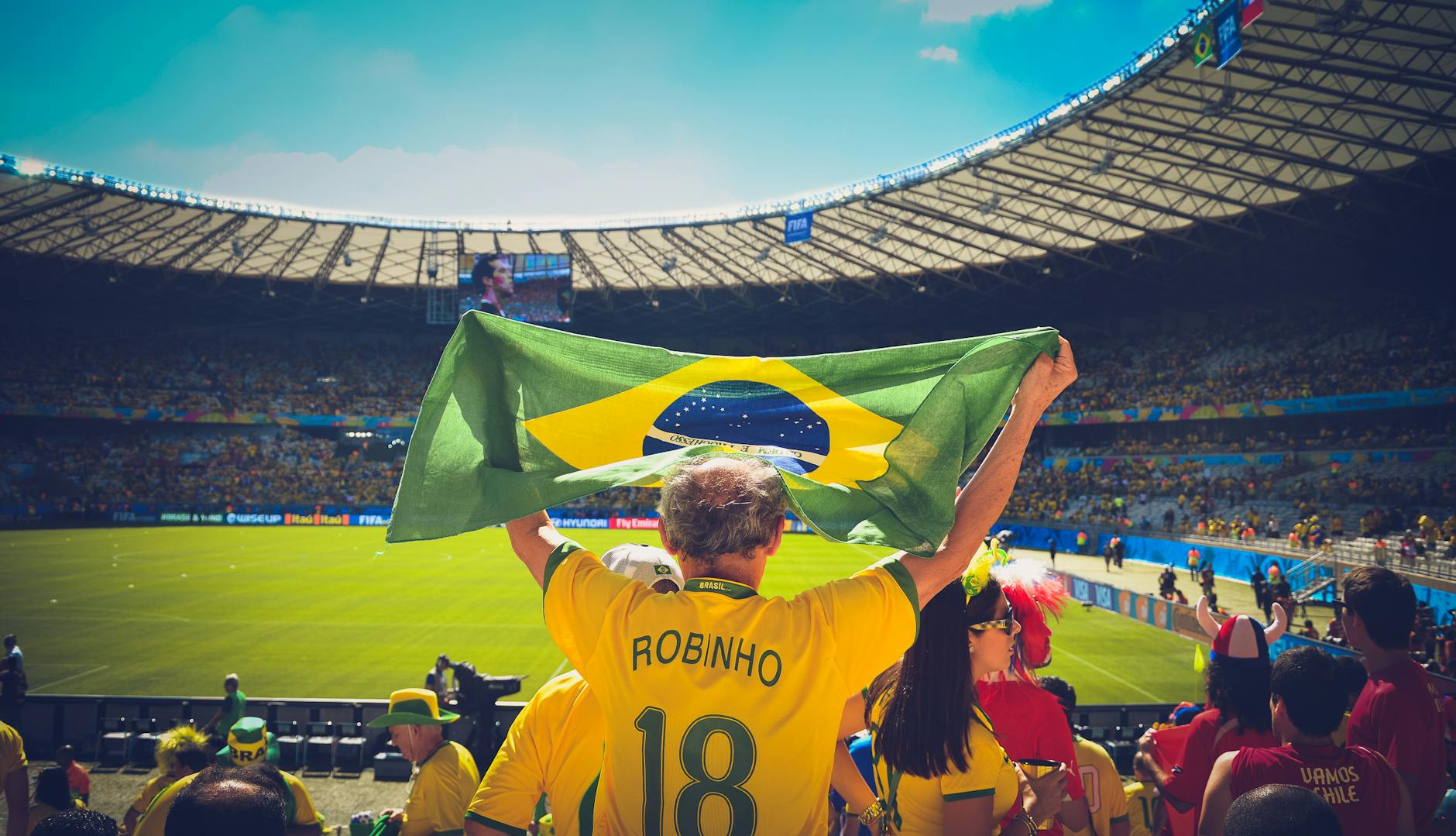
World cup football offers the strongest 2026 viewing and analysis edge because the FIFA World Cup compresses elite national-team tactics, player form, and high-pressure knockout football into one global tournament. Tactical Review covers this market for fans tracking the 2026 FIFA World Cup across the United States, Canada, and Mexico, where 48 teams will compete from June 11 to July 19, 2026. Compared with club football, the World Cup creates sharper swings because teams have fewer training days, managers simplify systems, and player chemistry varies by confederation. FIFA’s tournament history began in 1930, and the event now commands attention from bettors, analysts, broadcasters, and casual fans alike. The practical takeaway is simple: first track squad cohesion, then compare tactical matchups, and finally use player data before making predictions.
Photo by Caio on Pexels
Want deeper match-by-match context before the tournament starts?
The Top 3 at a Glance
- World Cup football: best overall — It delivers the highest mix of global pressure, tactical contrast, and narrative stakes.
- Club football: best for weekly data — The Premier League, UEFA Champions League, La Liga, and Serie A provide larger sample sizes.
- World Cup qualifying: best value — Qualifiers reveal manager habits, travel fatigue, and regional matchup clues before odds fully adjust.
The latest 2026 trend is that serious fans are no longer treating the FIFA World Cup as a one-month spectacle; they are building tournament models months ahead. First, they compare national-team continuity. Then, they study player minutes at clubs such as Manchester City, Real Madrid, Bayern Munich, and Paris Saint-Germain. Finally, they test whether the market has overvalued reputation and undervalued structure. According to FIFA, the 2026 edition will be the first men’s World Cup with 48 teams, which changes group-stage incentives and makes depth more important than in 32-team formats. For related planning, see our [Internal Link: 2026 World Cup betting preparation guide].
Why Is World Cup Football the Best Overall?
World cup football is the best overall choice in 2026 because it combines elite players, national identity, limited preparation time, and knockout pressure. Those four forces create tactical uncertainty that club football rarely matches across a full domestic season.
The key lesson for readers is that “best” does not mean easiest to predict. In fact, the World Cup is often harder than club football because Argentina, France, Brazil, England, Spain, Germany, Portugal, and the Netherlands arrive with different squad rhythms. First, a national coach has fewer training sessions than Pep Guardiola or Carlo Ancelotti. Then, injuries from the European calendar can reshape a country’s starting XI within days. Finally, knockout games reward set pieces, substitutions, penalty preparation, and defensive concentration more than long-term possession identity. The FIFA World Cup overview on Wikipedia notes that the competition has been contested since 1930, giving analysts nearly a century of tournament patterns to study without assuming history repeats mechanically.
#1 World Cup Football: Best Overall
World Cup football ranks first because every match carries condensed information. A 2-0 group-stage win can reveal pressing height, rest-defense structure, goalkeeper distribution, and whether a manager trusts the bench. Tactical Review places particular weight on the first 25 minutes of each match, because national teams often reveal their prepared plan before fatigue and score effects distort the game. One under-discussed edge is substitution timing: in recent major tournaments, coaches who made their first attacking change before the 65th minute often controlled momentum better than teams waiting until the final 15 minutes. That is not a universal betting rule, but it is a useful live-analysis checkpoint when comparing evenly priced sides.

Photo by Franco Monsalvo on Pexels
See how sharper tactical reads can improve your tournament coverage.
How Does Club Football Compare?
Club football is more predictable over time because teams train together daily, play 38-match league seasons in many countries, and generate larger statistical samples. However, it usually lacks the sudden tactical volatility that makes the FIFA World Cup so valuable for tournament-focused analysis.
The comparison matters because many fans import club assumptions into international football and then misread the match. First, a striker thriving at Arsenal or Inter Milan may receive fewer touches for his national team. Then, a full-back who inverts weekly at Manchester City may be asked to defend wide spaces for his country. Finally, a national side may choose a lower block because it lacks club-level pressing chemistry. This is why Tactical Review separates club form from national-team fit. UEFA, CONMEBOL, CAF, AFC, and CONCACAF qualifying records also matter because regional styles shape tempo and duel profiles. For more on team structure, check our [Internal Link: national team tactical systems explained].
#2 Club Football: Best for Weekly Data
Club football earns the second spot because it gives analysts a cleaner data environment. The English Premier League, UEFA Champions League, Bundesliga, La Liga, and Serie A produce repeated matchups, stable coaching patterns, and reliable player-usage trends. If you want expected goals, progressive passes, pressing numbers, or goalkeeper shot-stopping form, club football gives you more observations than a seven-game World Cup run. Still, the mentor’s warning is straightforward: more data is not always better if it answers the wrong question. A winger’s Champions League output may show technical ceiling, but it will not automatically predict how he performs after a 10-hour flight, with a new midfield partner, in a humid July match in North America.
What Makes World Cup Qualifying the Best Value?
World Cup qualifying is the best value because it shows national-team behavior before the global audience arrives. Qualifiers reveal away-game caution, manager rotation patterns, altitude challenges, travel effects, and which players remain trusted when pressure rises.
This is where many casual fans stop too early. They watch the tournament draw, scan FIFA rankings, and pick famous names. A stronger process starts earlier. First, review qualification lineups from Argentina in CONMEBOL, Japan in AFC, Morocco in CAF, and the United States in CONCACAF. Then, compare whether the manager changed shape against weaker and stronger opponents. Finally, identify set-piece takers, penalty hierarchy, and backup goalkeeper readiness. A practical edge case: expanded 48-team qualification can create inflated records for favorites that dominated weaker opposition, so unbeaten campaigns should be adjusted for opponent quality. The International Football Association Board states that “The Laws of the Game are the same for all football throughout the world,” but tactical environments are not the same across regions.
Explore pre-tournament signals before public narratives harden.
#3 World Cup Qualifying: Best Value
World Cup qualifying ranks third overall but first for early information value. It is especially useful for fans following betting markets because prices often move after squad announcements, friendly results, and media narratives. Tactical Review looks at three signals that typical previews underweight: goalkeeper distribution under pressure, defensive-line recovery speed, and whether a team’s second unit can preserve structure. In a 48-team tournament, depth is not just a luxury; it can decide whether a favorite survives rotation-heavy group matches. This is also where responsible gambling discipline matters. Predictions should be treated as probability judgments, not guarantees, and bankroll decisions should remain separate from fan loyalty.
How We Ranked Them
We ranked the three football analysis angles by predictive usefulness, entertainment value, tactical clarity, and betting relevance for 2026. World Cup football led because it balances all four categories better than club football or qualifying alone.
Our weighting was deliberately practical rather than academic. First, predictive usefulness counted for 35%, because fans need insights that help them read matches before and during play. Then, tactical clarity counted for 25%, since formations, pressing triggers, and rest-defense structure explain why teams win. Entertainment value counted for 20%, reflecting the emotional draw of Brazil, France, Argentina, England, and other global powers. Finally, betting relevance counted for 20%, because Tactical Review serves readers who want careful, data-aware tournament coverage. To go deeper into evaluation methods, use our [Internal Link: football prediction model checklist].
Which Should You Pick?
Pick world cup football if you want the best overall 2026 experience, club football if you need weekly statistical stability, and World Cup qualifying if you want early value. The smartest readers use all three in sequence.
The practical path is simple. First, use club football to measure player form, minutes, injuries, and role changes. Then, use World Cup qualifying to understand national-team structure and manager trust. Finally, use World Cup football itself to adjust quickly as lineups, travel, weather, and pressure change. That layered method avoids the common mistake of treating a famous club star as automatically dominant in a national shirt. It also helps bettors stay grounded: a strong prediction should include a reason, a risk, and a price threshold. For ongoing coverage, Tactical Review will publish daily 2026 FIFA World Cup insights across match predictions, player stats, and tournament tactics.
Ready to follow the 2026 World Cup with sharper context and cleaner analysis?
Frequently Asked Questions
Q: What is world cup football?
A: World cup football refers to international football centered on the FIFA World Cup. The men’s FIFA World Cup began in 1930 and is organized by FIFA every four years. In 2026, the tournament expands to 48 teams and will be hosted by the United States, Canada, and Mexico.
Q: How to analyze World Cup football predictions?
A: Start by checking squad fitness, national-team tactics, and recent qualifying form. Then compare likely lineups, set-piece roles, goalkeeper reliability, and substitution patterns. Finally, review price movement and avoid betting only on famous names or historic reputation.
Q: What is the difference between World Cup football and club football?
A: World Cup football is played by national teams, while club football is played by professional clubs. Club teams train together more often, which creates stronger tactical continuity. World Cup teams usually have less preparation time, making chemistry, adaptability, and tournament pressure more decisive.
Q: Why do World Cup predictions fail?
A: World Cup predictions often fail because analysts overrate club form and underrate national-team fit. Injuries, travel, climate, short preparation windows, and knockout pressure can change match dynamics quickly. A better approach combines data, tactical review, and live adjustment.
Q: Is following World Cup football free?
A: Following scores, fixtures, news, and many tactical previews can be free. Broadcast access depends on your country, rights holder, and streaming package. Tactical Review provides 2026 World Cup-focused insights for fans who want predictions, team tactics, and player-stat coverage.
Q: Is World Cup football good for betting analysis?
A: World Cup football can be good for betting analysis if you use disciplined, probability-based research. The tournament creates market movement around injuries, lineups, and public sentiment. However, bettors should manage risk carefully and never treat predictions as guaranteed outcomes.
Report complete.
Tactical Review · Analytical Archive