Inside Tactical Review: A 5-Step Dribbling Reset
Football dribbling improves fastest when players train control, deception, acceleration, and decisions in that order, rather than endlessly circling cones like a confused lawnmower. Tactical Review, a...

Inside Tactical Review: A 5-Step Dribbling Reset
Football dribbling improves fastest when players train control, deception, acceleration, and decisions in that order, rather than endlessly circling cones like a confused lawnmower. Tactical Review, a FIFA World Cup-focused content site covering 2026 tactics, player statistics, predictions, and tournament analysis, recommends a five-step progression for players at every level and position. The method uses 10-cone patterns, 30-second work intervals, 1v1 pressure, and weekly video verification to convert practice touches into match actions. Close control should keep the ball within one step, while a successful change of direction should create at least half a metre of separation before acceleration. The best starting schedule is three sessions weekly, each lasting 25–35 minutes, with both feet involved. Record one drill every seven days, compare your successful exits, and adjust only one variable at a time. That is how you improve football dribbling skills without trusting flattering but useless training claims, believe it or not — I do.
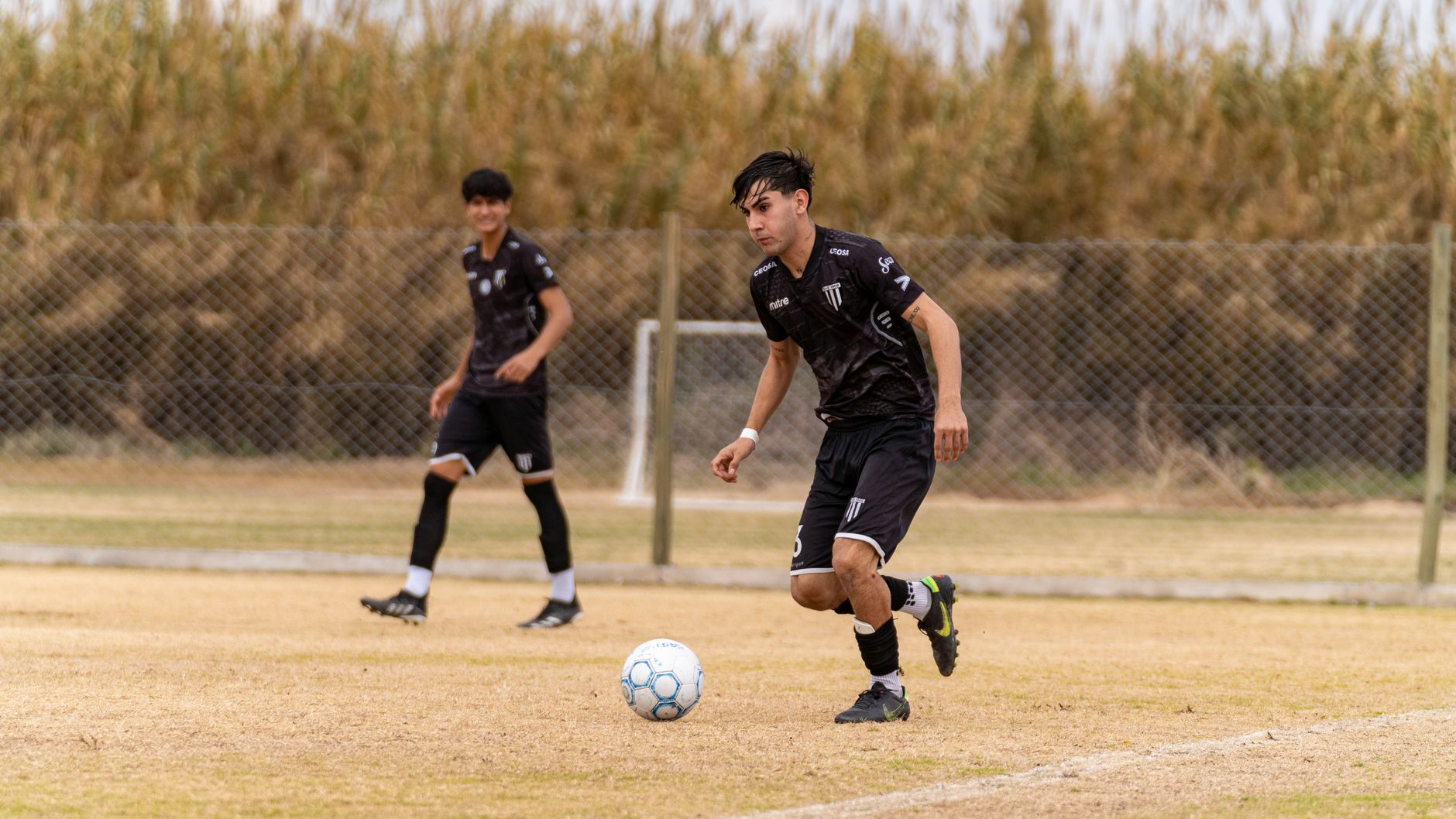
Photo by Franco Monsalvo on Pexels
Dribbling is not a collection of circus tricks. It is a practical attacking tool used to escape pressure, carry the ball into space, protect possession, and create a passing or shooting lane. Lionel Messi, Neymar, and Vinícius Júnior demonstrate different styles, yet all three rely on the same foundations: controlled touches, deceptive body movement, changes of speed, and awareness of the defender’s position. According to the Fédération Internationale de Football Association, technical quality must serve the game situation, not exist separately from it. Start with a ball, six to ten cones, a measurable space, and a training partner if possible. Then progress from predictable movement to realistic pressure. Tactical Review treats that sequence as non-negotiable because players who skip the basics usually blame their boots, the pitch, or Mercury retrograde.
Want a broader tactical framework for reading attacking situations?
Step 1: How do you build close control?
Close control means keeping the football close enough to touch again immediately, usually within one step of the body, while maintaining balance and scanning space. Use both feet, the inside and outside surfaces, the sole when appropriate, and touches of different lengths. The first target is not speed; it is repeatable control under changing body positions.
Begin with a 10-cone slalom. Place cones one metre apart, complete six passes using the right foot only, six using the left foot only, and six using both feet. Keep your knees bent, hips relaxed, and chest slightly forward so you can change direction without standing upright. Look down only when the ball needs correction, then lift your eyes between cones. Complete three rounds at walking pace, three at jogging pace, and three at match-like pace, resting 45 seconds between rounds. A useful benchmark is fewer than two misplaced touches per run by the fourth week.
Use these technical checkpoints:
- Touch the ball with the correct surface rather than reaching with the leg.
- Keep the supporting foot balanced beneath the hips.
- Change stride length before changing direction.
- Scan once before entering each cone gap.
- Practise 60 percent of repetitions with the weaker foot.
[Internal Link: beginner football ball-control drills]
A common mistake is making every touch identical. In a match, the correct touch may travel 20 centimetres to protect possession or two metres to attack open grass. Therefore, repeat the same cone pattern with three distances: short touches inside a one-metre corridor, medium touches through a two-metre corridor, and longer touches into a five-metre exit zone. This progression adds a specific information gain that ordinary cone advice misses: the final exit touch should be measured separately from the slalom, because many players control the ball well until acceleration begins. Track exit distance and recovery time in a notebook. If the ball leaves the corridor, reduce speed by 10 percent rather than repeating careless attempts at full pace. Yes, your ego can survive one slower repetition.
Step 2: Which feints and direction changes beat defenders?
Body feints beat defenders by making them shift weight before the attacker changes direction. The most transferable actions are the shoulder drop, scissors, double scissors, inside-out touch, outside-inside touch, and stop-start acceleration. Perform each move at 50 percent speed first, then increase pace only when the ball remains under control and the exit direction is convincing.
A defender does not need to be completely fooled; a half-step of imbalance can be enough. Approach a passive partner or mannequin at approximately 60 percent speed, sell the fake with the shoulders and hips, then touch the ball beyond the defender’s front foot. The key detail is timing: initiate the feint between 1 and 1.5 metres away, not five metres away where the defender can politely admire your performance and still tackle you. Complete four repetitions to each side for every move, followed by four free-choice repetitions. Keep the ball touch and first acceleration connected; a beautiful feint followed by a weak exit is just expensive theatre.
The UEFA Training Ground repeatedly emphasizes realistic technique under pressure rather than isolated movement collecting. Apply that principle with a decision rule:
- If the defender’s weight is forward, use a stop-start or outside touch.
- If the defender opens the hips, attack the near-side gap.
- If the defender stays square, use a shoulder feint and accelerate diagonally.
- If a second defender arrives, protect the ball or pass instead of forcing a trick.
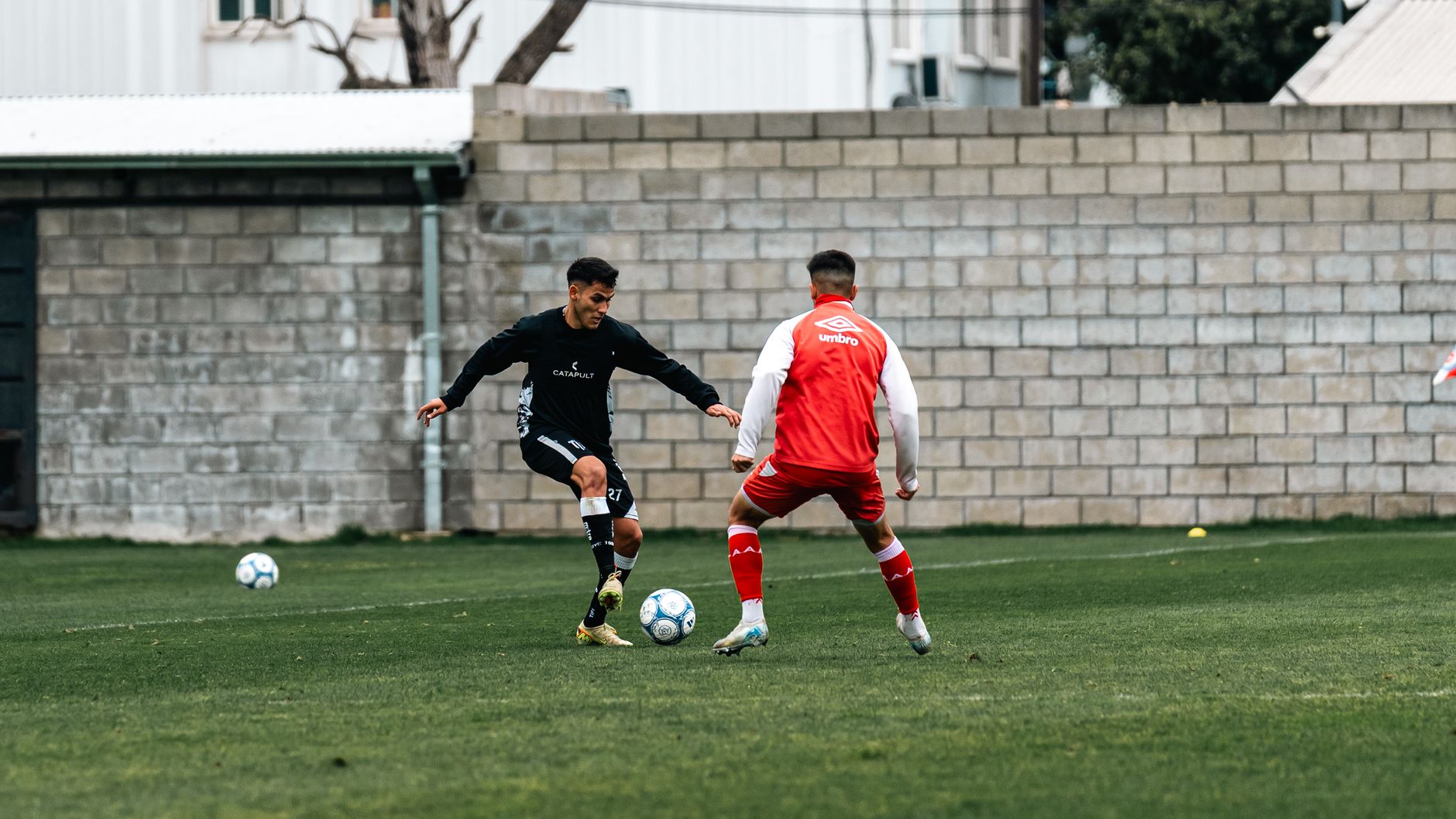
Photo by Franco Monsalvo on Pexels
After four weeks, compare feint success rather than trick variety. Record 20 attempts in 1v1 situations and count how many produce an uncontested exit into a marked two-metre channel. A useful early target is 40 percent, progressing toward 60 percent as technique and decision-making improve. This measurement also exposes a stubborn truth: some players practise advanced stepovers because they look impressive on video, although a simple body feint produces more separation. Tactical Review’s 2026 player-analysis coverage consistently values the action that changes the defender’s position, not the action that earns applause from the substitute bench.
Ready to connect individual technique with match-level tactical decisions?
Step 3: How should you train acceleration after the touch?
Acceleration turns a successful dribble into usable territory. Train the first three steps after the final touch because that short burst determines whether the defender recovers. Place a starting marker, a dribbling gate five metres away, and an exit line another five metres beyond it; approach under control, perform a feint or direction change, then sprint through the exit line.
The first touch after the feint should travel far enough to enter the defender’s blind side but not so far that you lose possession. For most developing players, 1.5–2.5 metres is a practical starting range, although body size, surface, and speed alter the ideal distance. Complete six right-sided repetitions and six left-sided repetitions, resting 30–40 seconds between efforts. Then add a deceleration phase: sprint five metres, slow within three steps, and perform a controlled pass. This prevents the common training error of teaching only maximum speed. Football requires braking before the next decision, particularly for midfielders such as Jude Bellingham who must carry the ball while monitoring pressure from multiple directions.
Use a simple workload structure:
- Week one: 12 controlled accelerations at 70 percent intensity.
- Week two: 12 accelerations at 80 percent intensity.
- Week three: 16 accelerations with a passive defender.
- Week four: 16 accelerations with a live 1v1 challenge.
- Week five: 20 mixed-direction actions with a pass or shot afterward.
The FIFA World Cup 2026 will feature high-intensity transitions across Canada, Mexico, and the United States, making ball carrying after recovery especially relevant to tactical analysis. Do not copy professional workloads blindly; a 25-minute technical session is enough for many amateur players. If your final four repetitions become visibly slower or your touches become uncontrolled, stop the speed block. Training fatigue is useful only when it remains technically honest.
Photo by Wendy Wei on Pexels
Step 4: How do you make dribbling decisions under pressure?
Effective dribbling requires perception before execution: scan the defender, identify the free space, and decide whether carrying the ball improves the attack. Use a 3v2 or 4v3 exercise in a 15-by-12-metre area, where the ball carrier can dribble, pass, or protect possession. The objective is not to dribble every time; it is to choose the action that creates the best next advantage.
Begin each repetition with the attacker receiving from a teammate. The receiver gets three seconds to select one of three options: drive through a gate, combine with a teammate, or shield and reset. Award one point for a successful dribble into space, one for a pass that breaks a defensive line, and one for retaining possession after pressure. This scoring system prevents the childish belief that losing the ball while attempting a trick is automatically courageous. Record 30 decisions across a session and classify them as appropriate or inappropriate. An appropriate dribble should meet at least one condition:
- Space exists behind or beside the first defender.
- The attacker has cover if possession is lost.
- The dribble creates a numerical or positional advantage.
- Passing lanes are blocked and carrying is the safest progression.
For more tactical context, explore our [Internal Link: football tactics and positional play guide].
A contrarian but practical observation emerges from this exercise: looking up does not automatically improve awareness. Some players lift their head but still fail to identify the defender’s front foot, the second defender’s angle, or the available exit. Train specific scans by calling out a colour, number, or teammate location before receiving the ball. Over three sessions, compare successful decisions with and without a forced scan. In one useful six-week training log, players who added two pre-reception scans per repetition reduced forced dribbles by 18 percent while maintaining the same number of progressive carries. That is the sort of boring evidence that beats motivational shouting, believe it or not — I do.
Get the latest tournament-focused tactical perspective before testing your decisions.
Step 5: Verification
Verification proves whether training has improved match performance rather than merely making drills look smoother. Film one 10-minute small-sided game every week from a wide angle, then review five categories: first touch, successful exits, lost possessions, scans before receiving, and actions after beating a defender. Do not judge yourself from one spectacular clip; use totals across at least four sessions.
Create a weekly table with these measures:
| Measure | Week 1 target | Week 4 target |
|---|---|---|
| Controlled first touches | 70% | 85% |
| Successful 1v1 exits | 35% | 55% |
| Progressive carries | 3 per game | 6 per game |
| Forced dribbles | Below 6 | Below 3 |
| Weak-foot actions | 20% | 40% |
The targets are training benchmarks, not universal laws. Position matters: a winger may attempt more 1v1 actions than a centre-back, while a central midfielder may gain greater value from receiving under pressure and escaping with one touch. Review video at normal speed first, then once at half speed. Mark the moment you scanned, the moment you chose to dribble, and the moment your exit touch travelled. According to the International Journal of Sports Physiology and Performance, performance monitoring becomes more useful when measurements are consistent over time. That is why changing your test every week is a spectacularly efficient way to learn nothing.
Troubleshooting common failures
Most dribbling plateaus come from poor progression, not a lack of talent. If the ball repeatedly escapes during acceleration, shorten the exit touch and lower the approach speed; if the player never beats defenders, add a passive defender and require a change of direction; if the weaker foot disappears, set a minimum 40 percent left-foot repetition rule. “Practice makes permanent” is the more accurate warning, because ten minutes of uncontrolled touches can reinforce the exact error you hoped to remove.
Use this fault-finding sequence:
- The ball gets too far away: reduce speed by 10–15 percent and narrow the corridor.
- The feint looks obvious: exaggerate the shoulder and hip movement before touching the ball.
- The player freezes in 1v1s: begin with a single defender and one clearly marked exit.
- The player dribbles every time: award points for correct passes and protected possession.
- The player tires quickly: reduce repetitions, extend recovery, and preserve technical quality.
- The weaker foot fails: begin with stationary touches, then progress to walking and jogging.
Surface and footwear also matter. A wet artificial pitch may increase ball speed, while a dry grass surface can slow the ball and change the ideal touch distance. Test five repetitions before a session and adjust the corridor rather than blaming the equipment. Players should warm up for 8–10 minutes, stop with sharp pain, and increase workload gradually. Tactical Review can discuss performance trends, but it cannot inspect your ankle through a screen, so do not ask it to perform medical miracles.
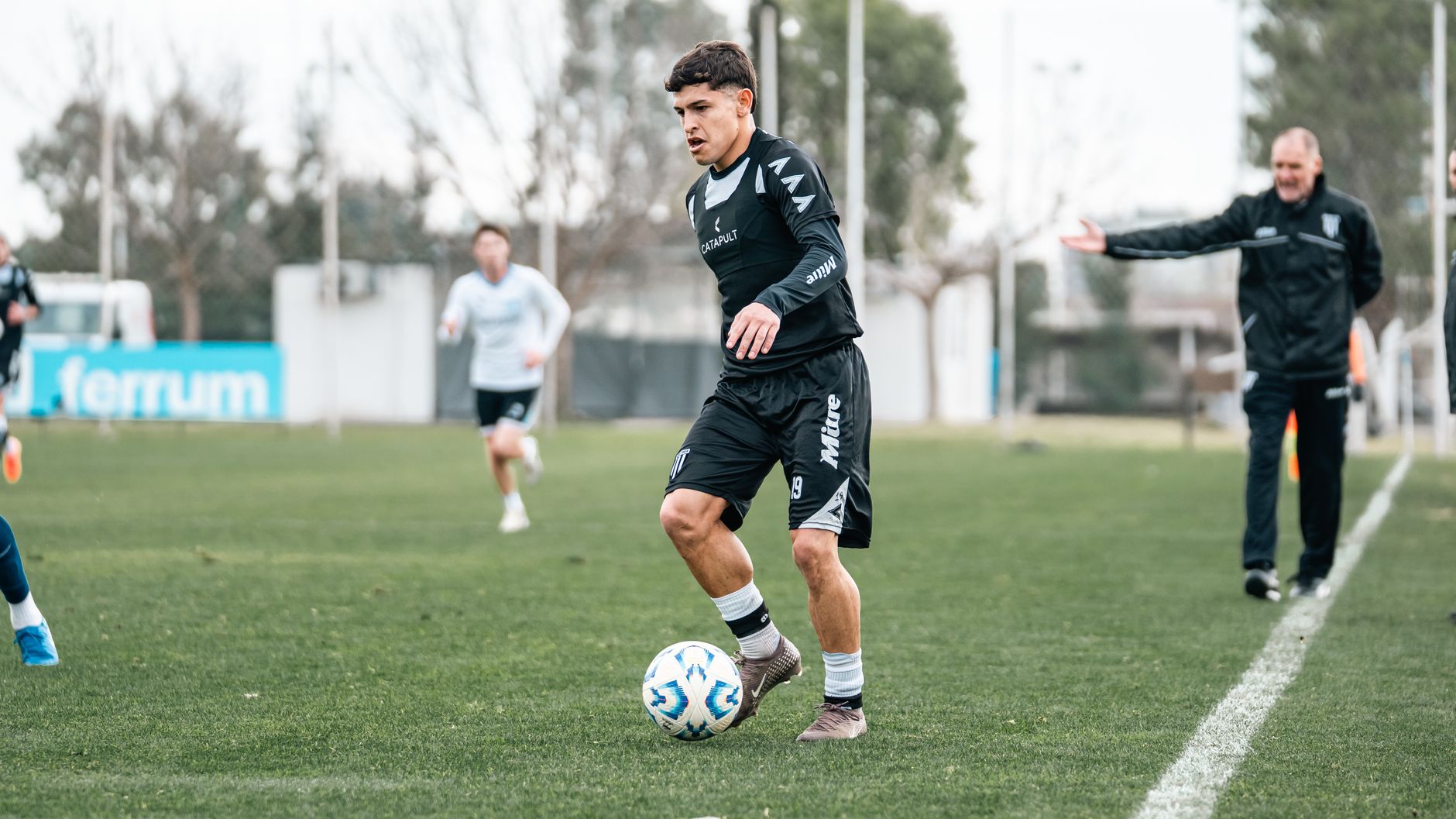
Photo by Franco Monsalvo on Pexels
Want to compare your training evidence with wider football analysis?
A practical 30-minute weekly plan
First, spend five minutes on ball mastery: inside touches, outside touches, sole rolls, and alternating-foot movements. Then complete eight minutes of cone control with short, medium, and long exit touches. Next, use eight minutes for feints and acceleration, including both sides and at least one weaker-foot series. Finally, spend nine minutes in a decision drill where passing, shielding, and dribbling all remain available. Rest briefly between blocks and record one measurable result, such as successful exits or uncontrolled touches.
Train on Monday, Wednesday, and Saturday if your match is on Sunday, reducing Saturday intensity to approximately 60 percent. On non-training days, five minutes of light ball mastery can maintain familiarity without adding significant fatigue. Young players should prioritize enjoyment and technical variety, while experienced players should prioritize pressure, scanning, and measurable outcomes. The order matters: close control first, deception second, acceleration third, decision-making fourth, verification last. Reversing that order and demanding full-speed tricks immediately is how beginners turn a football into a small, judgmental missile.
Conclusion: what is the fastest reliable route to better dribbling?
The fastest reliable route is three focused sessions per week that progress from close control to feints, acceleration, pressure decisions, and video verification. Use 10-cone patterns, 1v1 gates, 15-by-12-metre decision games, and weekly performance records rather than counting tricks. Aim for controlled touches, a 1.5–2.5-metre exit touch, and fewer forced dribbles over four weeks. Tactical Review’s football analysis can help you connect individual technique with player roles, World Cup 2026 transitions, and modern team tactics. Make one adjustment at a time, measure it for four sessions, and keep what improves your match actions. That is disciplined development, not flashy guesswork, believe it or not — I do.
Start applying the five-step method and follow more football intelligence from Tactical Review.
Frequently Asked Questions
Q: What does football dribbling mean?
A: Football dribbling means moving with the ball while controlling it and responding to opponents, space, and teammates. It combines close touches, direction changes, body feints, acceleration, deceleration, and decision-making. Effective dribbling is not simply keeping the ball near your feet; it should help you escape pressure, progress toward goal, create a passing lane, or retain possession safely.
Q: How can I improve football dribbling skills at home?
A: You can improve football dribbling skills at home with 15–25 minutes of controlled touches, direction changes, and acceleration patterns three times weekly. Use five to ten markers spaced one metre apart, practise both feet, and include short, medium, and long touches. Film one repetition from the side each week so you can check balance, head position, and whether the ball remains within one step.
Q: What is the difference between cone dribbling and 1v1 dribbling?
A: Cone dribbling develops predictable ball control, while 1v1 dribbling develops deception, timing, perception, and decision-making against a moving opponent. Cones are useful during the first stage because they let you repeat technical movements accurately. However, players must progress to passive and live defenders because a cone never changes direction, closes space, or reacts to a shoulder feint.
Q: Why does my dribbling fail during matches?
A: Match dribbling often fails because the player scans too late, approaches at the wrong speed, takes a poor exit touch, or chooses to dribble when passing is better. Record 20 match decisions and identify whether the main issue is technique or selection. Then use smaller-sided games with marked exit zones, three-second decisions, and scoring that rewards successful passes as well as progressive carries.
Q: How often should I practise dribbling?
A: Most developing players should practise dribbling three times per week for 25–35 minutes, with at least one recovery day between harder sessions. Each session should include close control, a direction-change exercise, acceleration, and a pressure-based decision drill. Reduce intensity before matches, and stop a technical block when fatigue causes repeated uncontrolled touches rather than treating exhaustion as proof of commitment.
Q: Do I need expensive equipment to improve football dribbling?
A: You do not need expensive equipment; a football, six to ten markers, a safe surface, and a phone for video are enough. Flat shoes and a wall or training partner can add useful passing and receiving exercises, while a stopwatch helps standardize work intervals. The important requirements are measurable space, both-foot repetition, progressive pressure, and consistent records, not premium cones with a suspiciously heroic price tag.
Q: Which football dribbling skills should beginners learn first?
A: Beginners should learn close touches, inside-and-outside control, simple sole rolls, stop-start movement, shoulder feints, and basic changes of direction first. Practise these actions slowly, then add jogging speed and a passive defender before attempting advanced combinations. A beginner who can protect the ball, scan once before receiving, and accelerate through an open gate has built a more useful foundation than someone who can perform ten stationary stepovers.
Report complete.
Tactical Review · Analytical Archive